Booking choice: The Napa and Sonoma wine tour, from $157 per person. Check dates Tour details
Napa and Sonoma sit side by side north of San Francisco, separated by the Mayacamas Mountains. Ask which is better and you will get a strong opinion from anyone who lives there. The useful answer is about money, reservations and what you want to drink.
Here is how they compare on the numbers, which suits whom, where to sleep, and how to see both without driving.
The quick answer
Pick Napa for famous Cabernet, landmark wineries and restaurants, and accept reservations and $79 average tastings. Pick Sonoma for lower fees ($47 on average), more walk-in tasting rooms and a relaxed plaza town. Stay in Napa or Yountville for a Napa trip, in Sonoma town for a Sonoma one. To taste both in a day from San Francisco, book the Napa and Sonoma tour.
Is it better to go to Napa or Sonoma?
Napa if you want the big names and Cabernet and don't mind booking; Sonoma if you want lower fees, walk-ins and variety. First-time visitors with one day usually prefer Napa.
Napa is the valley people mean when they say wine country: 30 miles long, Highway 29 lined with famous estates, and some of the best restaurants in America in Yountville. It is also more expensive and more planned. You book wineries, you pay $79 a tasting on average, and on an October Saturday you sit in traffic.
Sonoma is a county, not one valley. It is larger and looser, with Pinot Noir and Chardonnay country near the coast and Zinfandel inland, and more places that pour without a booking. Prices are lower, the pace slower. We'd send a first-timer to Napa for the landmarks and a second-timer to Sonoma.
How are Napa and Sonoma different?
Napa is smaller and focused, with about 475 wineries and 47,000 vineyard acres; Sonoma County has more than 425 wineries, about 60,000 acres and 19 AVAs.
| Napa | Sonoma | |
|---|---|---|
| Wineries | About 475 physical wineries | More than 425 |
| Vineyard acres | 47,216 | About 60,000 |
| AVAs | 18 (Napa Valley + 17 sub-AVAs) | 19 |
| Average standard tasting | $79 (2026) | $47 (2025) |
| Average reserve tasting | $125 (2026) | $95 (2025) |
| Walk-ins | Assume a reservation is needed | Mostly open without appointments |
| Known for | Cabernet Sauvignon | Pinot Noir, Chardonnay, Zinfandel |
| Feel | Polished, planned | Relaxed, spread out |
Sources: Napa Valley Vintners fast facts, Sonoma County fact sheet 2025, SVB 2026 and the Napa Wine Project for fees. Napa grows about 4% of California's wine grapes, which tells you how much of its price is reputation.
Is Sonoma cheaper than Napa for wine tasting?
Yes. The average standard tasting is about $47 in Sonoma against $79 in Napa, and reserve tastings about $95 against $125.
On a three-winery day that is roughly $100 a person saved on standard tastings alone. Autumn weekends push room prices up in both valleys.
The fee gap shapes the tours too. San Francisco operators spend much of their day in Sonoma, where included tastings cost them less. The Sonoma small-group tour is open about it: three boutique Sonoma wineries, tastings and lunch included, 13 guests at most. The full cost breakdown is in what a Napa wine tour costs.
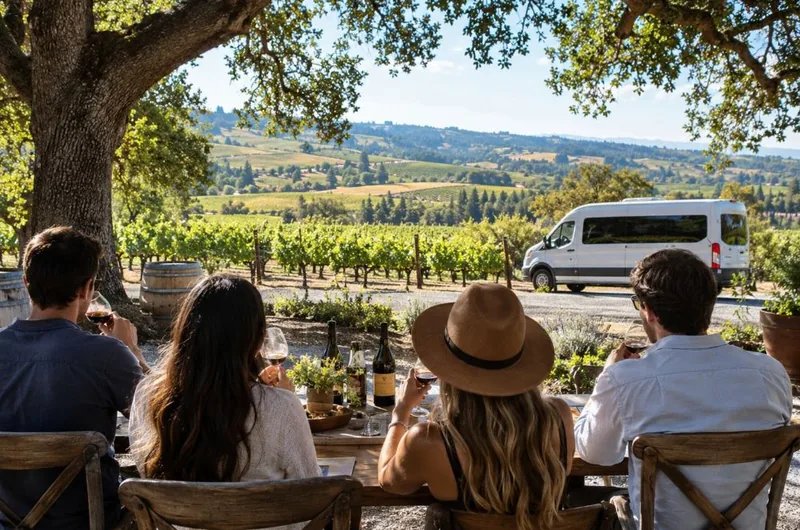
Three boutique Sonoma wineries, tastings and lunch included, 13 guests at most, with hotel pickup in San Francisco.
Explore the Sonoma small-group tour Tour detailsCan you walk into wineries without a reservation?
In Sonoma, often yes: the county says most of its wineries are open without appointments. In Napa, assume you need one, with a few exceptions such as V. Sattui and Sterling.
The difference is legal as much as cultural. Napa County's 1990 Winery Definition Ordinance requires use permits, and many newer wineries may only receive guests by appointment, some with daily caps. Visit Napa Valley's own advice is to assume that a reservation is most likely required. Those rules are being tested in federal court, with a hearing set for November 20, 2026 (Wine Industry Advisor), and our reservation rules post follows the case.
Sonoma County describes its 425-plus wineries as mostly open for tours and tastings without appointments. Weekends still fill up at the popular ones. Which Napa wineries take walk-ins is in the etiquette guide.
What is Carneros, and is it Napa or Sonoma?
Both. Los Carneros is a cool, foggy wine district at the south end of both valleys, split between Napa and Sonoma counties and known for Chardonnay, Pinot Noir and sparkling wine.
Carneros became an AVA in 1983. Wind and fog off San Pablo Bay keep it cool, which is why it grows Chardonnay, Pinot Noir and Merlot rather than the Cabernet of the warmer valley floor. Domaine Carneros, Artesa and Madonna sit on the Napa side; Roche and Robledo on the Sonoma side.
It is also on the road from San Francisco, which is why day trips love it. The premium tour stops at Artesa; the Napa and Sonoma tour picks from Artesa, Madonna and Roche among others. When a San Francisco tour says Napa, this is often the part of Napa it means.
Is it better to stay in Napa or Sonoma?
Stay in Napa (downtown or Yountville) if your trip is mostly Napa wineries; stay in Sonoma town if you want walk-in tasting and a plaza on your doorstep.
- Downtown Napa: walkable, with Oxbow Public Market and walk-in tasting rooms, the Wine Train station and the meeting points for the trolley and the picnic tour. The most practical base.
- Yountville: small and food-focused: The French Laundry, Bouchon Bakery and the start of the e-bike tour. Pricey.
- St. Helena and Calistoga: up-valley, quieter, close to Sterling, Castello di Amorosa and the hot springs.
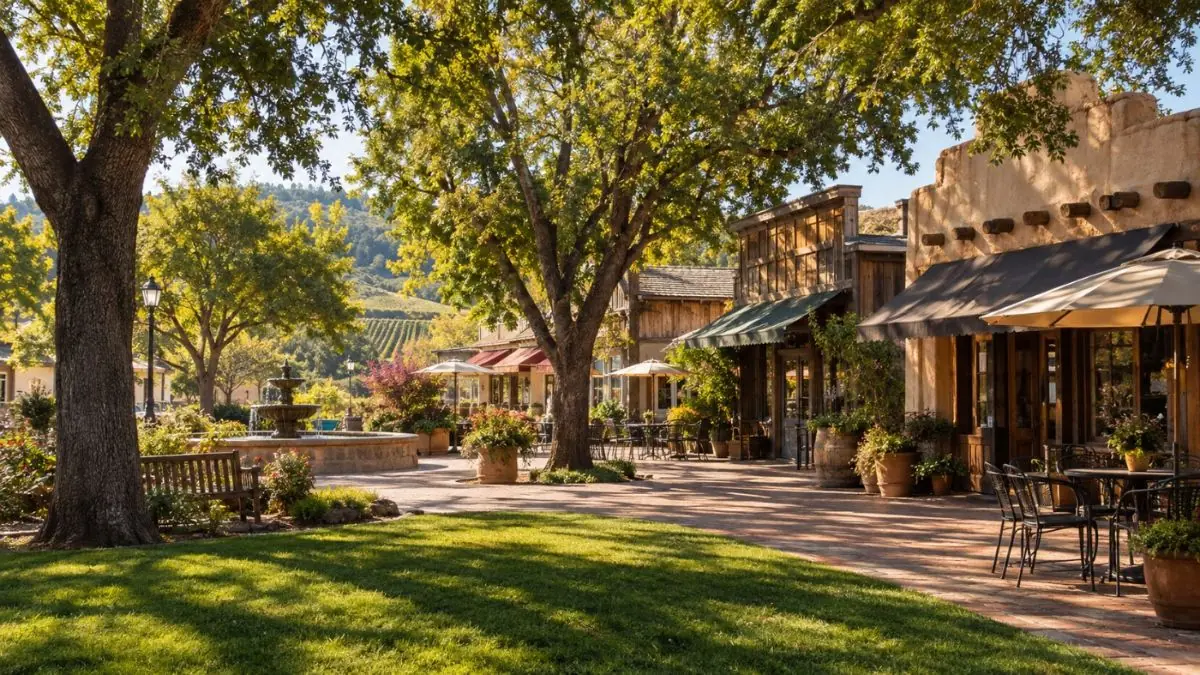
- Sonoma town: the 8-acre plaza laid out in 1835, a National Historic Landmark with the last of California's 21 missions. Tasting rooms, restaurants and inns around one square.
For a two-valley trip, Sonoma town or downtown Napa both work: they are about half an hour apart through Carneros.
Can you do Napa and Sonoma in one day?
Yes, if someone else drives. Three San Francisco tours combine both with tastings included, and a private car lets you choose the wineries in either valley.
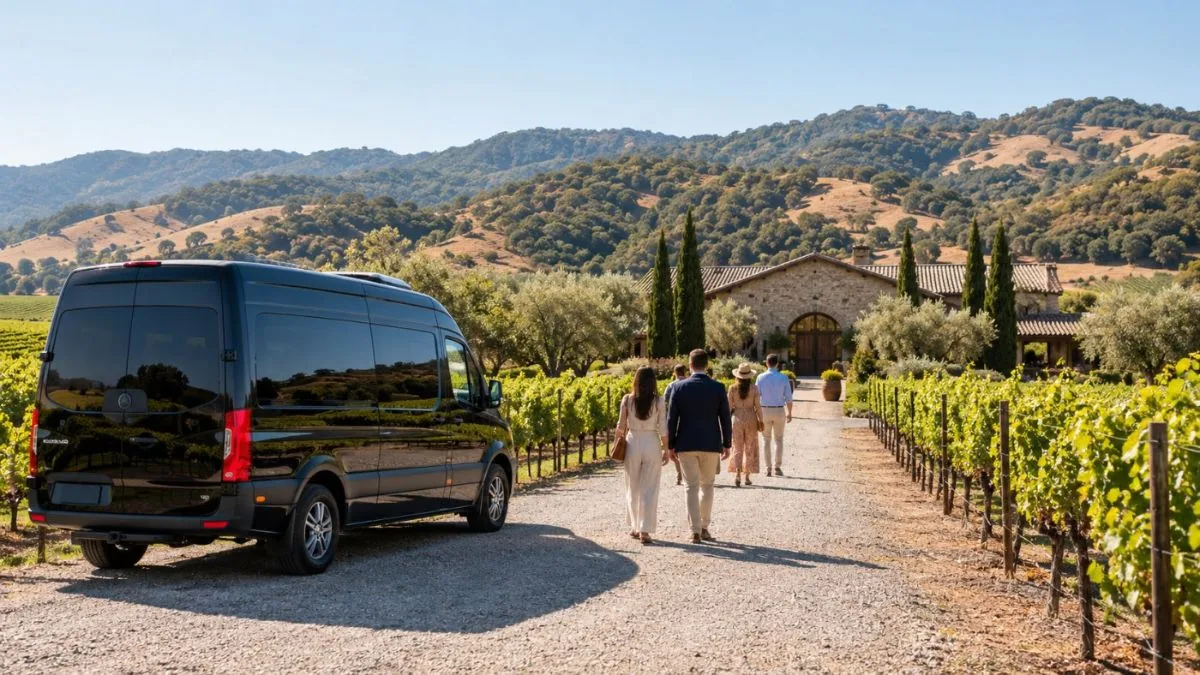
- The Napa and Sonoma tour ($157): three wineries with tastings, 90 minutes on Sonoma Plaza, 8 to 9 hours.
- The premium small-group tour ($148): Jacuzzi in Sonoma (Roche from January 2027) and Artesa in Carneros, 12 guests at most.
- The Muir Woods day ($179): redwoods, then Mayo and Jacuzzi in Sonoma and Ru Vango in Napa.
- The private car ($627 for up to four): two or three wineries of your choice, in either valley.
Two valleys in a day means about an hour per winery and a lot of road. For Napa itself, give it a separate day. All eleven tours compared shows which stay where.
Both valleys from San Francisco with three tastings included and lunch time on Sonoma Plaza.
Check dates for the Napa and Sonoma wine tourFrequently asked questions
Is it better to go to Napa or Sonoma?
Napa for famous Cabernet and landmark wineries, if you are happy to book ahead and pay more. Sonoma for lower fees, more walk-ins and a slower pace.
Is it better to stay in Napa or Sonoma?
Stay in downtown Napa or Yountville for a Napa-focused trip, in Sonoma town for Sonoma. Downtown Napa is the most practical base for tours.
How far apart are Napa and Sonoma?
About half an hour by car between downtown Napa and Sonoma Plaza, through Carneros.
Is Carneros in Napa or Sonoma?
Both. Los Carneros spans the south end of Napa and Sonoma counties and is known for Chardonnay, Pinot Noir and sparkling wine.
Ready to book
Choose your tour
Free cancellation up to 24 hours before on every option. Prices are from-prices in USD and move with the season.
Napa & Sonoma Valley Wine Tour
Three tastings included and free time on Sonoma Plaza
Sonoma Small-Group Wine Tour with Lunch
Three boutique Sonoma wineries, tastings and lunch included, 13 guests at most
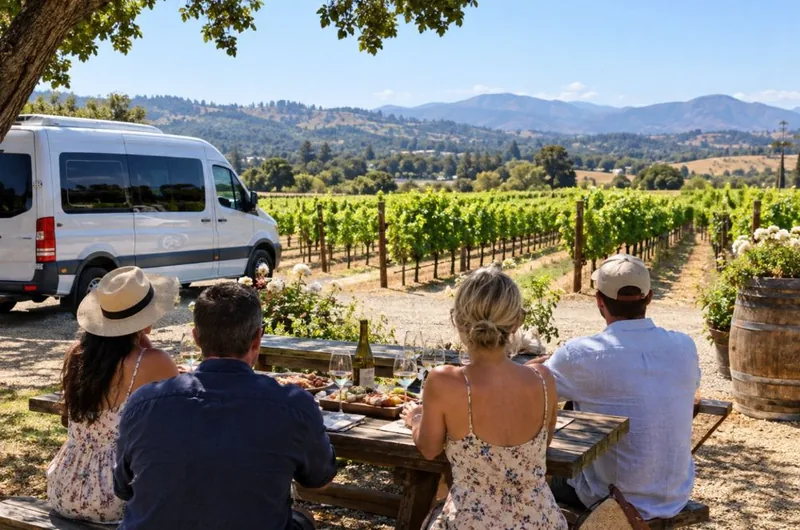
Napa Valley Wine Tour with Picnic Lunch
- Three boutique wineries, about an hour at each
- Pickup in Napa, Yountville, St. Helena or American Canyon
- Picnic lunch and bottled water